

AuthorJournalistProducer

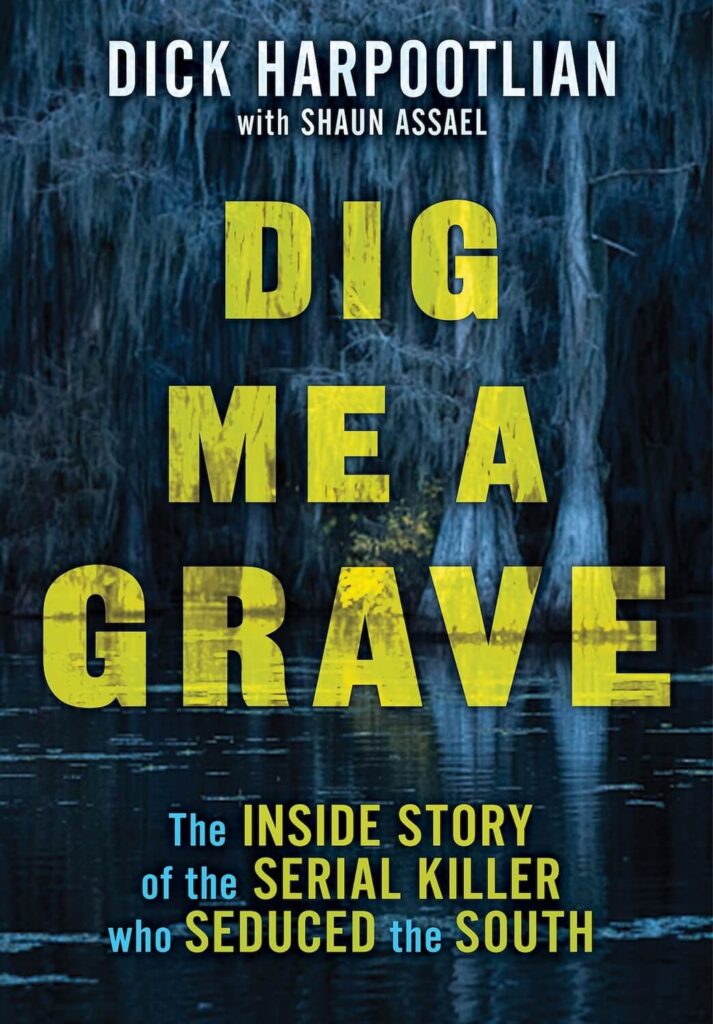
Dig Me a Grave

The Inside Story of the Serial Killer Who Seduced the South
Amazon Editors' Pick for Best of the Month: Nonfiction

The definitive true “Southern Gothic” account of the life, crimes, conviction, and execution of Donald “Pee Wee” Gaskins, the charismatic, brutal, well-liked, remorseless South Carolina serial killer who was dubbed the Charles Manson of the South—written by the prosecutor who brought him to justice.

Of the hundreds of murder cases that noted South Carolina attorney Dick Harpootlian has prosecuted, one in particular haunts him. Donald “Pee Wee” Gaskins was a serial killer and rapist, a master manipulator who claimed to have killed over 100 people and is known to have murdered over a dozen, including a toddler, and his own teenage niece. Yet it was on Death Row that he pulled off his most audacious murder—killing another inmate with a military grade explosive.

As personable as he was ruthless, Pee Wee defied easy categories. He killed to avenge minor slights as well as for pleasure, using any convenient method—including stabbing, shooting, poison, suffocation, and drowning. Evidence suggested he forced at least one victim to dig his own grave, stand in it, and be shot.

With escalating callousness, Pee Wee murdered acquaintances, friends, family members, and strangers. Yet within his North Charleston community he was well-liked—a family man who took neighborhood kids to the beach and hosted cookouts. Ice-cold within but outwardly charming, he joked with judges, reporters, and Harpootlian himself, but didn’t hesitate to hatch a plot to kidnap the prosecutor’s daughter in order to extort an escape.

Dig Me a Grave is a haunting look at a prolific, remorseless killer, as well as a provocative exploration of justice and the death penalty. 
“…a fascinating firsthand account of tangling with a monster.”
Publishers Weekly

“a haunted and haunting read.”
Garden & Gun

“The riveting inside story of how a South Carolina prosecutor sent a cold serial killer to the electric chair and the moral toll it took on him.”
—John Glatt, New York Times bestselling author

“A gothic crime tale about South Carolina’s most infamous serial killer. Murder, corruption, and the underbelly of Southern justice – my kind of beach read.”
— Jonathan Martin, POLITICO columnist and New York Times bestselling author

“Dick Harpootlian doesn’t just tell the story—he cross-examines it. Dig Me a Grave is a blistering, unapologetic journey into the darkest corners of justice.”
— Mark Geragos, nationally renowned criminal defense attorney and author of Mistrial

“Pee Wee Gaskins was a prolific killer from the American South, whose backwoods charm belied an unstoppable lust for killing. Harpootlian, the prosecutor who sent Pee Wee Gaskins to the electric chair, chronicles this tragedy in riveting fashion.”
— McCracken Poston Jr.,author of Zenith Man: Death, Love, and Redemption in a Georgia Courtroom

Get Your Copy

THE CASE

The Story

Last June, at a South Carolina coroners’ conference, a fellow county coroner handed Sumter County’s Robbie Baker a cardboard box, which Baker carried to his car to open. What he found inside gave him chills: fragments of a skull and bones—recovered after decades of misplacement—belonging to Martha Ann Dicks, a nineteen-year-old Sumter woman last seen alive in 1972. Chills, because Dicks was one of thirteen confirmed victims of Donald “Pee Wee” Gaskins, the South’s most prolific serial killer—“the redneck Charles Manson,” some called him—who’d left a trail of shattered lives and shallow graves in the Palmetto State. Chills, Baker says, because a half-century-plus after Gaskins’s first murder and thirty-four years after his execution, “Pee Wee is still haunting us.”

Dick Harpootlian is familiar with those chills. Harpootlian is a trial lawyer, most notably representing infamous Lowcountry lawyer turned convicted murderer Alex Murdaugh. Forty-some years before that, however, Harpootlian was the deputy prosecutor who sent Pee Wee Gaskins to the electric chair. Dig Me a Grave, cowritten with Shaun Assael, is Harpootlian’s account of that prosecution intertwined with a chronicle of Gaskins’s crimes. It’s a haunted and haunting read.

“During the 1970s,” Harpootlian writes, “hiding in plain sight as a roofer, [Gaskins] built a crime family out of the detritus of the rural South—teenage runaways, deadbeats, and lost souls. He collected more wives and mistresses than he knew what to do with and more ex-cons than he could possibly hide. Eventually, they rewarded him with intrigues and affairs, jealousy and betrayal. Things became so unwieldy, in fact, that he had to dismantle the outfit that he created by killing them—sometimes two at a time.”

keep reading at Garden&Gun

No results found.
The Murderer

The Murderer

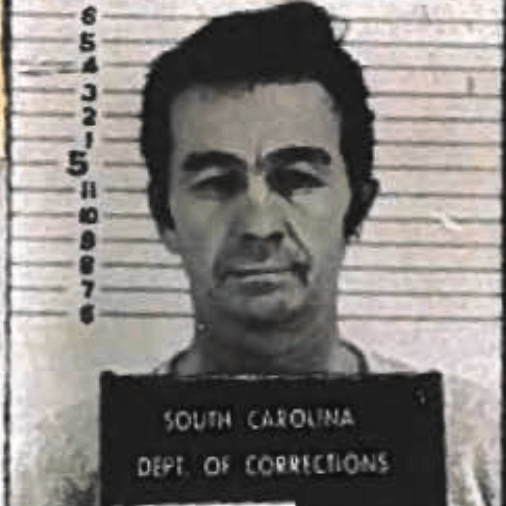
Donald Henry “Pee Wee” Gaskins Jr. (1933-1991)

Born Donald Henry Parrott Jr., Gaskins was an American serial killer and rapist. Before his convictions for murder, Gaskins had a long history of criminal activities resulting in prison sentences for assault, burglary, and statutory rape. During a search for a missing teenager in 1975, police discovered eight bodies buried in shallow graves near Gaskins’s home in Prospect, South Carolina.

In May 1976, a Florence County jury took only 47 minutes before finding Gaskins guilty for the murder of one of the eight victims, Dennis Bellamy, and sentenced him to death by the electric chair. That sentence was overturned by the SC Supreme Court in February 1978. Rather than face a new trial, Gaskins pled guilty to the murders of Bellamy and eight other friends and associates. He was given 10 concurrent life sentences, to be served at Central Correctional Institution (CCI). While at CCI, Gaskins received his second death sentence after being convicted of the brutal murder of fellow death row inmate Rudolph Tyner using C4 explosive. The sentence was administered in September 1991.

While on death row, Gaskins claimed to kill as many as 110 people, but these statements have been discredited. Of the fifteen people total that he murdered during his lifetime, ten were under age 25 and six were teenagers.